
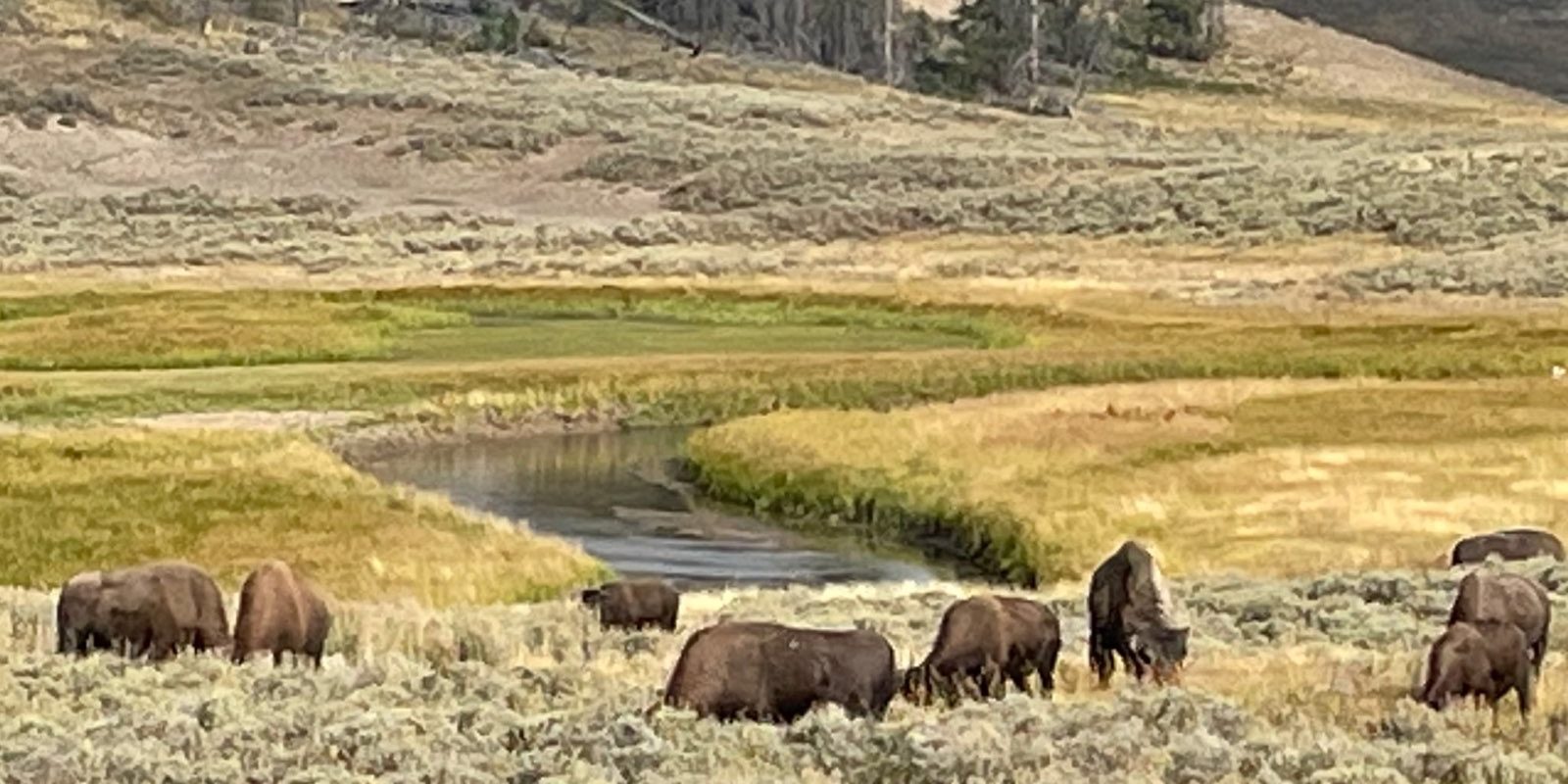
Yellowstone bison from our approved photo collection. Wildlife encounters are never guaranteed, and the best view is a respectful one.
Yellowstone wildlife watching works best when the plan leaves room for nature. A bison herd beside the road may become the day’s highlight; a place famous for sightings may be quiet when you arrive. If you are staying at Windhaven RV Resort in Dubois, build a manageable park outing rather than a race between distant wildlife locations.
Choose a route, not a wish list of animals
Decide which part of Yellowstone you can comfortably visit on your available day. A trip through the southern part of the park and a dedicated drive to a distant wildlife valley are different commitments. Put the route on a map, include the return to Dubois and allow time for stops before deciding what to add.
Check the official Yellowstone road information before departure. Seasonal access and closures can change the route entirely. Ask a ranger for current viewing advice after arrival, but do not turn a recent report into a promise that an animal will still be there.
Use binoculars to make the whole landscape interesting
Bring binoculars, a spotting scope or a long camera lens if you have one. Scan the wider scene rather than driving past everything except a crowd of parked cars. A distant animal behaving naturally is a more rewarding observation than a close-up created by approaching it.
Share the optics within your group and make space for a patient look. Watch what an animal is doing: grazing, resting, moving with its young or disappearing into cover. You do not need an extraordinary species count for the outing to feel worthwhile.
Know Yellowstone’s viewing distances
Yellowstone’s safety guidance calls for at least 100 yards from bears, wolves and cougars, and 25 yards from other wildlife, including bison and elk. Distance is a minimum, not permission to disturb an animal. Move away if it approaches or reacts to you; never feed or entice wildlife.
A roadside sighting also needs a safe parking decision. Use a permitted stopping place, keep traffic moving and follow ranger instructions. If you cannot stop safely, continue. The photograph is not more important than people, wildlife or the next driver’s visibility.
Make wildlife watching comfortable for your group
- Pack water and food so a promising stop does not immediately become a hunger problem.
- Carry layers, since standing and observing feels different from walking.
- Charge cameras and phones before departure.
- Use a suitable passenger vehicle when practical, leaving your RV settled at Windhaven.
- Agree on a return-driving plan and a point at which extra stops become optional.
Do not squeeze in a far-away sighting simply because somebody mentions it. Wildlife plans are allowed to change. A river view, thermal feature or visitor-center stop can make an excellent second part of the day when sightings are limited.
What about Yellowstone in winter?
Do not use a summer driving itinerary for a winter trip. Check official access and transportation arrangements for the specific park area you want to visit. Windhaven’s year-round operation is separate from Yellowstone’s road access. Our seasonal adventure pages offer other ways to plan time around Dubois.
Keep the return as relaxed as the viewing
Windhaven is a full-hookup RV base beside the Wind River, outside Yellowstone. Use our regional trip guide to balance park days and local days. The goal is a memorable encounter and a comfortable return—not a checklist you have to finish.
Plan your Windhaven stay
Check RV-site availability and book your stay. For questions, call or text 307-855-5427. Weekly and monthly stays are arranged by phone.


